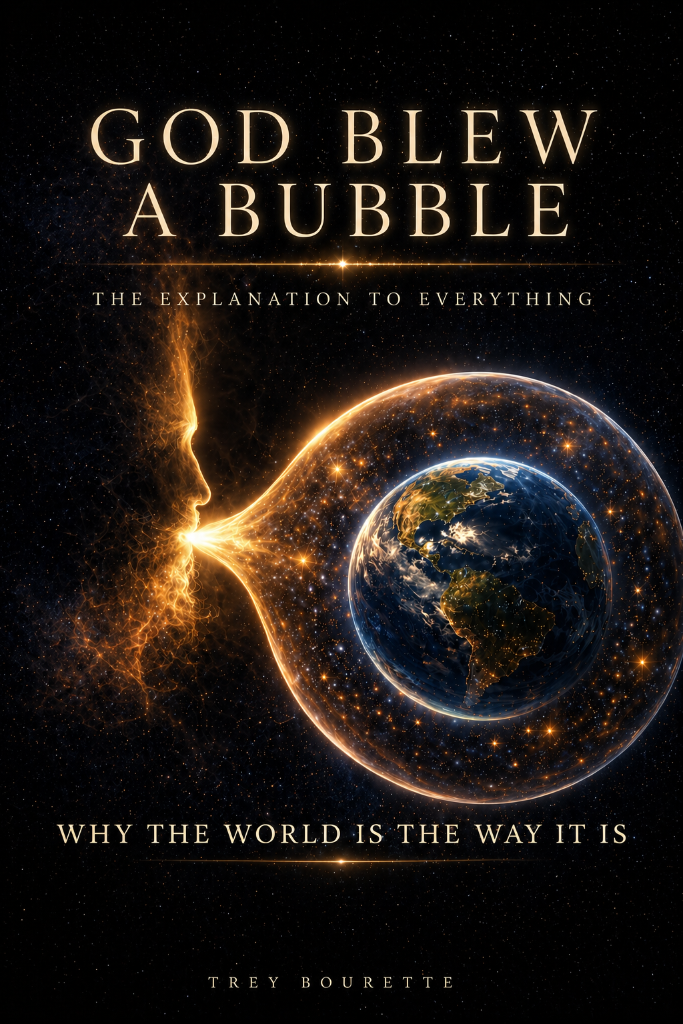
Before anything existed, there was God.
Not space.
Not time.
Not angels.
Not matter.
Just God.
Which already creates a problem.
Because when we say "God," we don't mean a powerful being inside the universe. We mean the source of everything. Unlimited. Uncreated. Complete. Nothing missing. Nothing needed.
And that raises a question we almost never ask out loud:
Why would a God like that create anything at all?
Not because He was lonely.
Not because He was bored.
Not because He needed worship.
A perfect God doesn't need.
So if creation happened, it wasn't because God lacked something — it was because He chose something.
And the thing He chose to create wasn't stars or planets or people.
It was love.
That sounds obvious. It also sounds easy.
It isn't.
Because here's the problem no one likes to face:
God can't create love.
Not directly.
If He could, He would have already done it perfectly. Instantly. Infinitely. Without pain. Without risk. Without history.
But love doesn't work that way.
Love isn't manufactured.
It isn't commanded.
It isn't programmed.
Love only exists if it's chosen.
Which means the moment God decided to create love, He accepted something radical:
Love would have to arise without being forced — even by Him.
That's the cost.
An all-powerful God creating something that cannot be controlled by power.
An all-knowing God allowing outcomes He already knows will hurt.
An all-present God choosing not to fill everything with Himself.
Because if He did — if He flooded creation with His presence, His certainty, His authority — love wouldn't stand a chance.
Obedience would happen. Order would happen. Perfection might even happen.
But love wouldn't.
So God faced a choice.
Not between good and evil — but between cheap certainty and real love.
And He chose love.
Which meant choosing risk.
Which meant choosing restraint.
Which meant choosing a world where things could go wrong — not because He failed, but because He refused to force what must be freely formed.
This is where most explanations stop working.
Because once you see this, you can't unsee it.
If love is the goal, then control becomes the enemy.
And if God's goal really is love — not compliance, not performance, not appearances — then the world we're living in suddenly makes a terrifying kind of sense.
A world where love matters this much would cost everyone something.
Including God.
Especially God.
And if that's true, then the mess we're standing in isn't evidence of His absence.
It's evidence of His restraint.